ThermaLine Ice Melt Systems
Our heated panels are designed to safely eliminate snow and ice buildup before it becomes a problem.



Our heated panels are designed to safely eliminate snow and ice buildup before it becomes a problem.


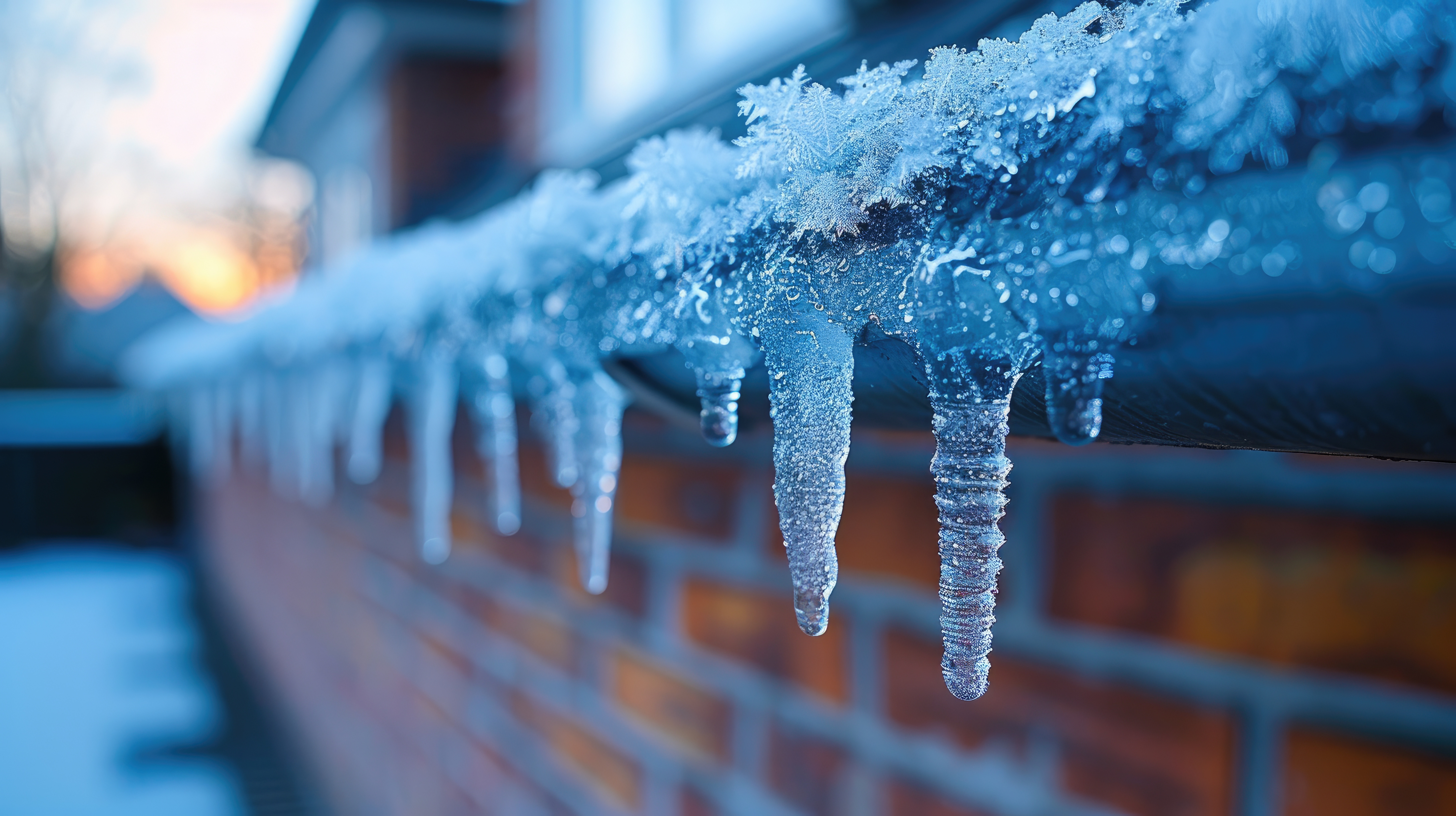
The roof has four years left. The eave has iced for three winters running. Someone in the meeting says the obvious thing: why not just do the deicing when we replace the roof?
It is a reasonable question, and it stalls more fall decisions than any other single objection. It also has a real answer, which is not always the same answer. Sometimes waiting is genuinely the better financial and technical decision. Sometimes it means accepting four more winters of a problem you already know how to solve, and paying for those winters in ways that never show up as a line item.
The variables that decide it are specific: how much service life the assembly actually has left, what condition the surface is in, which details are dramatically cheaper to build during a tear-off, and how the roofing manufacturer’s warranty treats what you are about to attach. ThermaLine manufactures roof ice melt systems for both existing and new roofs, which means this question comes up in nearly every fall conversation, and the honest answer depends on facts about your specific assembly.
This article covers lifecycle timing only. Seasonal timing, meaning how late in the year an installation can still happen, is a separate constraint that applies either way, and we cover it in when to install commercial roof heat cable systems before winter. Cost figures are handled in what a commercial roof deicing system costs for large facilities rather than here.
When someone asks whether the deicing should wait for the reroof, they are usually asking one of three different things, and the answers diverge.
“Will we have to tear it out and redo it?” This is a legitimate concern about wasted money. The answer depends on the attachment method and the panel configuration, and it is addressable.
“Is it cheaper to do it all at once?” Partly true, and specifically true for certain details. The savings are real but narrower than people assume.
“Can we defer this expense to a year when we are already spending on the roof?” This is a budget question wearing technical clothing, and it deserves an honest budget answer rather than a technical deflection.
Sorting out which question is actually being asked is worth doing before the meeting, because the third one is often the real driver and the first two are the cover story.
The first thing to establish is whether a retrofit is technically sound on the roof you have right now. Age alone does not answer this. Condition does.
Adhesive-mounted panel systems, including ThermaLine’s, bond to the roof surface with commercial-grade adhesive rather than fasteners, which means the roof deck is never penetrated. That attachment method is what makes retrofit practical on an existing roof, and it is also what makes surface condition the controlling variable.
What matters is whether the surface can hold a durable bond for the service life of the system. Practically, that means evaluating:
That last point matters more than people expect. Eave and valley zones frequently weather differently from the field of the roof, and often worse, because those are exactly the areas where ice has been sitting. A roof with a good overall condition rating can have a degraded eave, and the eave is where the panels go.
On asphalt shingle roofs, the practical questions are whether the shingles in the coverage area still have adequate granule retention and mat integrity, whether the tabs are sealed and lying flat, and whether the surface is brittle. Heavily weathered shingles that have lost most of their granules, or that are curling or cupping at the eave, are a poor bonding surface, and a system installed on them will need to come off when the roof does.
Shingles in serviceable condition are a different matter. Panels install onto the existing shingle surface without penetrating the deck, and the assembly stays intact. The question then becomes purely one of remaining years, which we address below.
Metal roofing tends to be the most retrofit-friendly case, because metal panels typically remain dimensionally sound and cleanable well into their service life, and finish condition can be evaluated directly. The considerations are whether the coating is intact or chalking heavily, whether there is active corrosion in the coverage area, and how panel movement is accommodated. Standing seam assemblies in particular move with temperature, and the attachment approach has to work with that behavior rather than against it.
On TPO, EPDM and modified bitumen, compatibility is a specific technical question rather than a general one. Membrane chemistry, surface condition, weathering, and prior coating applications all affect whether an adhesive bond will hold. This is not something to assume from the membrane type alone, and it should be verified against the actual roof rather than the specification. Membrane assemblies also carry the most restrictive manufacturer warranty language, which we come back to shortly.
Some of the “do it all at once” argument is real. It is worth being precise about which parts.
Details that get built into the assembly rather than onto it. Edge metal, drip edge configuration, valley detailing and flashing transitions can be designed around the deicing system when the assembly is open, rather than worked around afterward. This is the genuine saving, and it also produces a better detail than a retrofit typically achieves.
Electrical rough-in. Running conduit and getting power to the roof edge is meaningfully easier when the roof is open and access is already established. Retrofitting a power run to a roof edge on an occupied building is not difficult, but it is a distinct piece of work with its own access and interior disruption considerations.
Insulation and ventilation corrections. If the fall inspection identified heat loss contributing to the ice formation, a tear-off is the only realistic opportunity to correct insulation continuity at the eave. That correction is not a substitute for a deicing system, because ice forms from solar melt and drainage behavior as well as heat loss, but it changes the severity of the problem and it is genuinely a now-or-never item.
Access and staging. The mobilization, roof access and safety setup are already in place. This is a real but modest saving relative to the others.
Products designed for new roofs. Some panel configurations are specifically designed to integrate with a new assembly rather than mount over an existing one. ThermaShingle+ and ThermaValley+ are built for new shingle roofs, where the panel is incorporated as the roof goes on rather than adhered over finished shingles. If a tear-off is imminent, these are worth understanding before deciding.
What is not meaningfully cheaper: the panels themselves, the cable, the controls, and most of the labor to install them. Those costs are broadly similar whether the work happens on a new roof or an existing one. The savings are concentrated in details and coordination, not in the system.
This is the part most likely to create an unpleasant surprise, and it is worth resolving in writing before anything is installed.
Most commercial roofing manufacturer warranties, particularly on single-ply membrane systems, contain language governing what may be attached to or installed on the roof. Attachments that penetrate the assembly almost always require manufacturer review and approval. Adhered attachments and surface-mounted equipment are often addressed separately, and the treatment varies considerably between manufacturers and between warranty tiers.
The practical significance of a non-penetrating, adhesive-mounted system is that it avoids creating deck penetrations, which is the category most likely to trigger a warranty issue. That is a meaningful advantage, but it is not the same as automatic warranty approval, and it should not be presented as such internally.
Steps worth taking, in order:
If the roof is going to be replaced soon, this sequence also runs in the other direction: the new roof’s warranty terms are negotiable at specification time, and having the deicing system in the specification from the start means the manufacturer evaluates it as part of the original system rather than as a later addition. That is a genuine and underappreciated argument for coordinating the two projects.
Remaining service life is the strongest single predictor, provided it is an honest estimate rather than an optimistic one. The table below reflects how these decisions typically resolve.
| Remaining roof life | Typical recommendation | Reasoning |
|---|---|---|
| Under 2 years | Coordinate with the replacement | The retrofit would be removed before it returns value, and detail integration during tear-off is the better outcome |
| 2 to 4 years | Depends on severity and surface condition | If the ice problem is severe and documented, a targeted retrofit on the worst areas often makes sense; if it is mild, waiting is defensible |
| 4 to 7 years | Retrofit now, in most cases | Enough service life to justify the installation, and several winters of exposure avoided |
| Over 7 years | Retrofit now | Waiting means accepting the problem for the majority of the roof’s remaining life for no offsetting benefit |
| Life uncertain | Get a condition assessment first | The timing decision cannot be made without this input, and guessing produces the worst outcomes in both directions |
Three factors adjust this framework:
Severity and documentation. A roof with three winters of documented interior water intrusion is a different case from one with cosmetic gutter sag. Severity pulls the decision toward acting now regardless of remaining life.
Surface condition in the coverage area specifically. As noted above, a roof with adequate remaining life overall can have a degraded eave that will not hold a bond. This pulls toward waiting or toward localized eave repair first.
Whether the replacement is actually scheduled. “We will replace it in four years” is often an estimate rather than a plan. If there is no funded, scheduled replacement in the capital plan, treat the remaining life as longer than stated, because deferral of roof replacement is extremely common. Waiting for a reroof that keeps sliding is how buildings end up with eight more winters of ice damage.
The middle path is usually available and is often the right one. Phasing works when it is planned as a phased system rather than executed as two disconnected projects.
Phase by roof area, not by system component. Install a complete, functional system on the worst documented area, including its own controls and power. Do not install cable now and controls later, or panels on half an eave with the intention of finishing the run next year. A complete zone works. A partial zone does not.
Choose the phase-one area from the evidence. The area with the most documented history, the interior consequence, or the tenant exposure. Our guide to reading a commercial roof in September for ice damage evidence covers how to establish that record, and it is exactly what a phasing decision should be built on.
Size the electrical for the full system now. This is the single most important phasing decision. Circuit capacity, panel space and the power run to the roof are the elements that are genuinely expensive to redo, and sizing them for the eventual full system during phase one costs comparatively little. Undersizing here is how phased projects end up paying twice.
Document the full design even if you only build part of it. A layout for the whole roof, with phase boundaries marked, means phase two is an extension rather than a redesign, and it also means the phase-one installation is detailed to accept a future connection.
Set the phase-two trigger explicitly. Either a date, a budget cycle, or the roof replacement. Phases without triggers become permanent.
If phase two is intended to coincide with the reroof, that is a sound plan, and it lets you use the new-roof products where they fit while keeping the existing retrofit in service on the areas that are not being torn off first.
Bring these to your roofing contractor, your deicing supplier and the membrane or shingle manufacturer.
For the roofing contractor:
For the manufacturer:
For the deicing supplier:
On that last point, it is worth knowing what you are comparing. ThermaLine systems carry a 10 year product warranty, are UL listed and compliant with NEC Article 426 for roof deicing, and the heat trace cable is typically replaced on roughly a 10 year interval, with the panel raceway designed so that cable service does not require removing the panels or disturbing the roof. Those service intervals are part of the lifecycle math, and they compare differently against a roof with four years left than against one with fifteen. The product guides detail how each application is configured, and our FAQ covers maintenance and control questions that come up during this evaluation.
Yes, in most cases. Adhesive-mounted panel systems install onto the existing roof surface without penetrating the deck, which is what makes retrofit practical. The controlling factor is not the roof’s age but the condition of the surface in the coverage area, because the adhesive bond has to hold for the service life of the system.
If the roof has less than about two years of service life remaining, coordinating with the replacement usually makes sense. Beyond roughly four years, retrofitting now is generally the better decision, because waiting means accepting the ice problem for most of the roof’s remaining life. Between those points, the severity of the documented problem and the condition of the eave area decide it.
Detail integration is the real saving: edge metal, drip edge, valley detailing and flashing can be designed around the system rather than worked around. Electrical rough-in is easier with the roof open, and insulation corrections at the eave are only possible during a tear-off. The panels, cable, controls and most installation labor cost broadly the same either way.
It depends on the manufacturer and the warranty terms, and it should be confirmed in writing before installation. Non-penetrating, adhesive-mounted systems avoid creating deck penetrations, which is the category most likely to trigger a warranty problem, but that is not the same as automatic approval. Submit the proposed system to the manufacturer for review and keep the response on file.
Yes, and it is often the right approach when budget or roof lifecycle timing is constrained. Phase by roof area with a complete, functional system in each zone rather than by component. Size the electrical service and circuit capacity for the full eventual system during the first phase, since that is the element that is genuinely expensive to redo.
Panels adhered to a roof surface come off when that surface comes off. This is why remaining service life matters to the decision. Where a replacement is planned, the electrical infrastructure and the design work carry forward, and the panel configuration appropriate to a new assembly can be specified as part of the new roof.
The retrofit-or-wait question is answerable, but not from a conference room. It requires an honest condition assessment of the coverage area, a realistic view of whether the replacement is scheduled or aspirational, a reading of the actual warranty language, and a documented picture of what the ice problem has been costing. With those four inputs, the decision usually becomes obvious. Without them, the default is deferral, and deferral has a price that is paid one winter at a time.
If you are weighing this decision for a specific building, contact ThermaLine with your roof type, approximate remaining service life, and inspection findings. We can help you evaluate whether the surface supports a retrofit now, what a phased approach would look like, and which configuration fits a replacement if that is the direction you take.