ThermaLine Ice Melt Systems
Our heated panels are designed to safely eliminate snow and ice buildup before it becomes a problem.



Our heated panels are designed to safely eliminate snow and ice buildup before it becomes a problem.


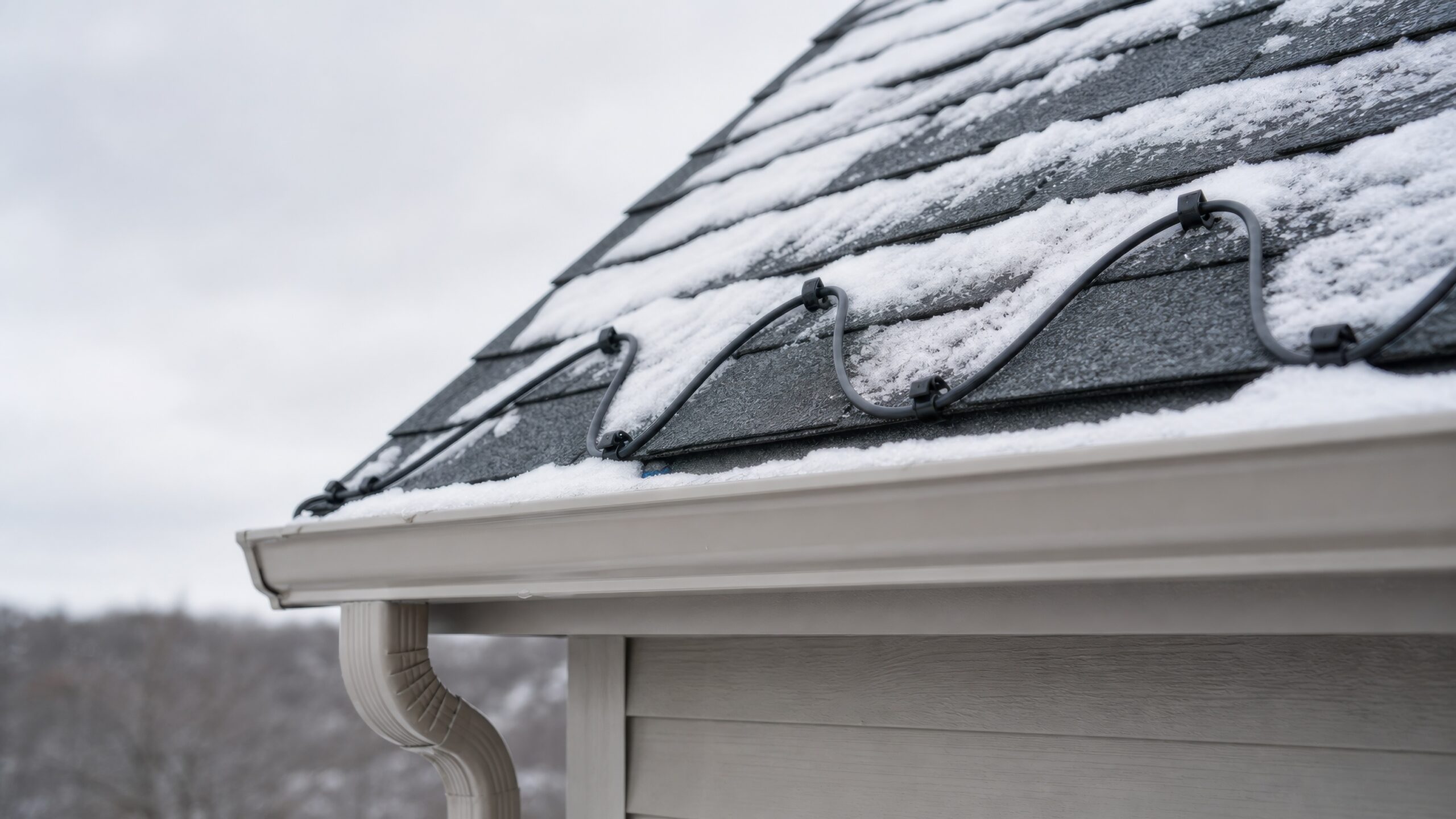
The fall inspection found the problem. The same eave has iced for three winters, the gutter run is sagging, and there is a stain on the top floor ceiling that comes back every February. Everyone agrees it needs to be fixed. Then someone asks where the money comes from, and the conversation stops.
This is the most common place a roof deicing project dies. Not because the technical case is weak, but because the request arrives in the wrong budget, in the wrong format, at the wrong point in the fiscal year, in front of people who were never given what they needed to approve it.
That is a solvable problem, and it has less to do with roofing than most facility managers expect. ThermaLine works with facility teams, contractors and ownership groups on these approvals every fall, and the requests that get funded tend to share a structure. This guide covers how a deicing system usually gets classified, who signs off, what documentation those people actually ask for, and how to time the request so it lands in a budget cycle that can absorb it.
This article deliberately contains no pricing. Cost is a real question and it deserves its own treatment, which is why we keep it separate in what a commercial roof deicing system costs for large facilities. What follows is about how the money gets approved, not how much it is.
A roof deicing system sits in an awkward position. It is not a repair, because nothing is broken in a way a repair would fix. It is not routine maintenance, because it is a one-time installation of a permanent system. And it is not usually part of a roof replacement, because the roof itself may have years of service life left.
That in-between status is why these requests stall. The maintenance budget is sized for consumables, service contracts and small repairs, and a permanent system typically exceeds what that line can absorb. Meanwhile, the capital plan is built around large, scheduled asset replacements, and a deicing system is easy to leave off a list that is already competing for limited funds.
The result is a project that everyone agrees is worthwhile and nobody owns. Breaking that stalemate starts with deciding, deliberately and early, which budget you are asking from.
The classification is a finance decision, not a facilities decision, and the rules differ by organization, ownership structure and accounting policy. Your controller or CFO makes the call, and the specific capitalization threshold and policy at your organization governs. What follows is the general reasoning most finance teams apply, so you can make the case in language they recognize.
Finance teams generally look at whether the expenditure creates or improves an asset rather than maintaining it in its existing condition. Arguments that support capital treatment include:
Conversely, some situations point the other way:
This is not an accounting technicality. The classification determines who approves the request, what documentation is required, how long the approval takes, and when the money becomes available.
An operating request usually goes to a facilities director or property manager, needs comparatively light documentation, and can often move within the current fiscal year. A capital request typically goes further up, requires a formal submission, competes against other projects for a fixed pool, and is approved on an annual cycle that may be six to twelve months ahead of when the work happens.
Knowing which track you are on tells you what to prepare and how early to start. Guessing wrong costs you a full budget cycle, which in this case means a full winter.
A capital request rarely has one decision maker. It has a chain, and each link evaluates it differently. Writing one document that satisfies all of them is the actual skill.
| Who | What they are evaluating | What convinces them |
|---|---|---|
| Facilities director | Whether the problem is real and the scope is right | Inspection findings, photographs, a clear description of what fails and where |
| Property or asset manager | Whether it protects asset value and tenant relationships | Damage history, tenant complaints, turnover or lease risk tied to the condition |
| Controller or finance | Whether the classification is correct and the numbers hold up | Clean scope, defensible classification, documented history of the alternative spend |
| Ownership or board | Whether this is the best use of constrained capital | Risk framing, comparison against the cost of doing nothing, urgency that is real and explained |
| Risk management or insurance | Whether it changes claim exposure | Claim history, documentation of repeat losses, evidence of proactive maintenance |
The two most commonly skipped stakeholders are risk management and the person who fields tenant complaints. Both hold information that strengthens the request considerably, and both are usually willing to supply it if asked. A claim history and a log of tenant complaints turn a facilities opinion into an organizational record.
Requests fail on documentation more often than on merit. The good news is that most of what is needed comes from the fall inspection you already performed. Our guide to reading a commercial roof in September for ice damage evidence covers how to gather and organize that field record, so this section covers what to do with it rather than how to collect it.
Assemble the following:
The physical evidence. Dated photographs of the affected areas, a marked-up roof plan showing numbered findings, and the interior stain locations mapped to the exterior conditions above them. This is what makes the problem concrete for someone who will never go on the roof.
The history. Every prior winter’s snow and ice removal invoices, emergency service calls, temporary repairs, interior repairs, tenant complaints, and any insurance claims. Multi-year history is far more persuasive than a single bad winter, because it establishes a pattern rather than an event.
The consequence record. What the condition has actually cost the organization beyond the direct repair: tenant disruption, closed areas, damaged inventory or equipment, lost use of space, staff hours diverted to managing it.
The scope. A defined description of what would be installed and where, ideally tied to specific roof areas identified in the inspection. Ownership approves scopes, not concepts.
The classification rationale. A short, plain paragraph explaining why the request belongs in capital, written in the terms your finance policy uses.
The alternative. A description of what happens if the request is deferred, stated factually rather than dramatically.
One practical note: assemble this as a single document with the photographs embedded, not as an email with attachments. Approval chains lose attachments. They do not lose a single well-organized PDF.
The sequence below reflects how these submissions tend to move through an organization successfully.
The strongest argument in most of these requests is not that the system is inexpensive. It is that the organization is already spending money on this problem every year and receiving nothing durable in return.
That comparison works best when it is built entirely from your own records. Reactive winter response is a recurring operating cost that produces no asset, carries no warranty and does not reduce next year’s exposure. A permanent system is a one-time capital expenditure that produces a depreciable asset with a defined service life. Those are different financial objects, and ownership groups understand the distinction immediately when it is framed that way.
Be careful not to overstate it. The honest version is that reactive response and prevention address the same risk with different economics and different reliability, and the right choice depends on how often the problem recurs and what it costs when it does. We work through that comparison in detail in commercial ice dam prevention systems versus reactive winter maintenance.
Two additional angles that carry weight with ownership:
Energy and operating characteristics. A modern engineered system’s operating cost is a legitimate part of the picture, and finance will ask. Have an answer ready rather than deflecting. Our overview of how much energy commercial roof heat cable systems use in winter covers what drives consumption.
Asset life and building performance. Repeated freeze and thaw cycling at the roof edge affects more than the roof surface. The longer-term case is laid out in how commercial roof ice melt system design impacts long-term building performance.
The single most common reason a well-built request fails is that it arrived after the budget was set.
Work backward from your organization’s cycle:
Two timing realities are worth accepting up front. First, in most organizations a fall inspection cannot fund an installation the same winter through the capital route, because the approval cycle is longer than the season allows. Second, that is exactly why the request should be built now rather than in January, when the same evidence is buried under an active emergency.
If the winter ahead genuinely cannot be absorbed, there is a middle path. A phased approach that protects the worst documented area through an operating or emergency authorization, with the balance submitted as capital for the following year, is a common and reasonable compromise. It also produces a working example on your own building, which is unusually persuasive in the next budget round.
Seasonal installation timing is its own constraint, and it interacts with all of this. We cover it in when to install commercial roof heat cable systems before winter.
Someone in the meeting will ask whether this can wait until the roof is replaced. It is a fair question and it has a real answer, which depends on the remaining service life of the assembly, which details are far cheaper to build during a tear-off, and how warranty coordination works with the roofing manufacturer. Do not improvise it. We cover the reasoning in retrofit now or wait for the reroof, and having a considered position on that question is often what separates a request that gets approved from one that gets tabled for further study.
Worth checking your submission against these before you send it:
It depends on your organization’s capitalization policy and the scope of work, and your finance team makes the determination. Permanent installations with multi-year service lives that add a capability the building did not previously have are commonly treated as capital, while small localized work below the capitalization threshold is often expensed. Confirm the classification with your controller before building the request.
Align with your fiscal calendar rather than the weather. For a calendar-year organization, that generally means a submission in late summer or early fall for funding the following January. Starting from a September inspection gives you the evidence, but the request needs to move quickly to make that cycle.
Dated inspection photographs, a marked-up roof plan, multi-year history of reactive spend and repairs, tenant complaints or claims tied to the condition, a defined scope, a written classification rationale, and product and code compliance documentation as an appendix.
Through the capital route, usually not, because the approval cycle is typically longer than the remaining season. A phased approach that addresses the worst documented area under an operating authorization, with the full system submitted as capital for the following year, is a common way to bridge the gap.
Build the case on history rather than forecast. Your organization’s own multi-year record of reactive spend, repairs and disruption is a documented, recurring cost that does not depend on predicting the coming season. The argument is that the money is already being spent and is producing nothing permanent.
Product listings and code compliance, the installation method and whether it penetrates the roof deck, warranty terms, expected maintenance intervals, and electrical requirements. Systems that are UL listed and compliant with NEC Article 426 for roof deicing clear engineering review more easily than those that are not.
A deicing project is rarely rejected because the problem is not real. It is rejected because it arrived as a facilities opinion instead of a documented, classified, scoped request with a history behind it and a deadline in front of it. Everything required to change that is already available to you in the weeks after a fall inspection.
If you are preparing a submission and need the technical documentation to support it, contact ThermaLine with your roof details and inspection findings. We can help you define a scope that matches your evidence and supply the product, listing and warranty documentation your approval chain will ask for. You can also review our product guides and the reasons facility teams choose ThermaLine as you assemble the appendix.